
 By Hellen Reta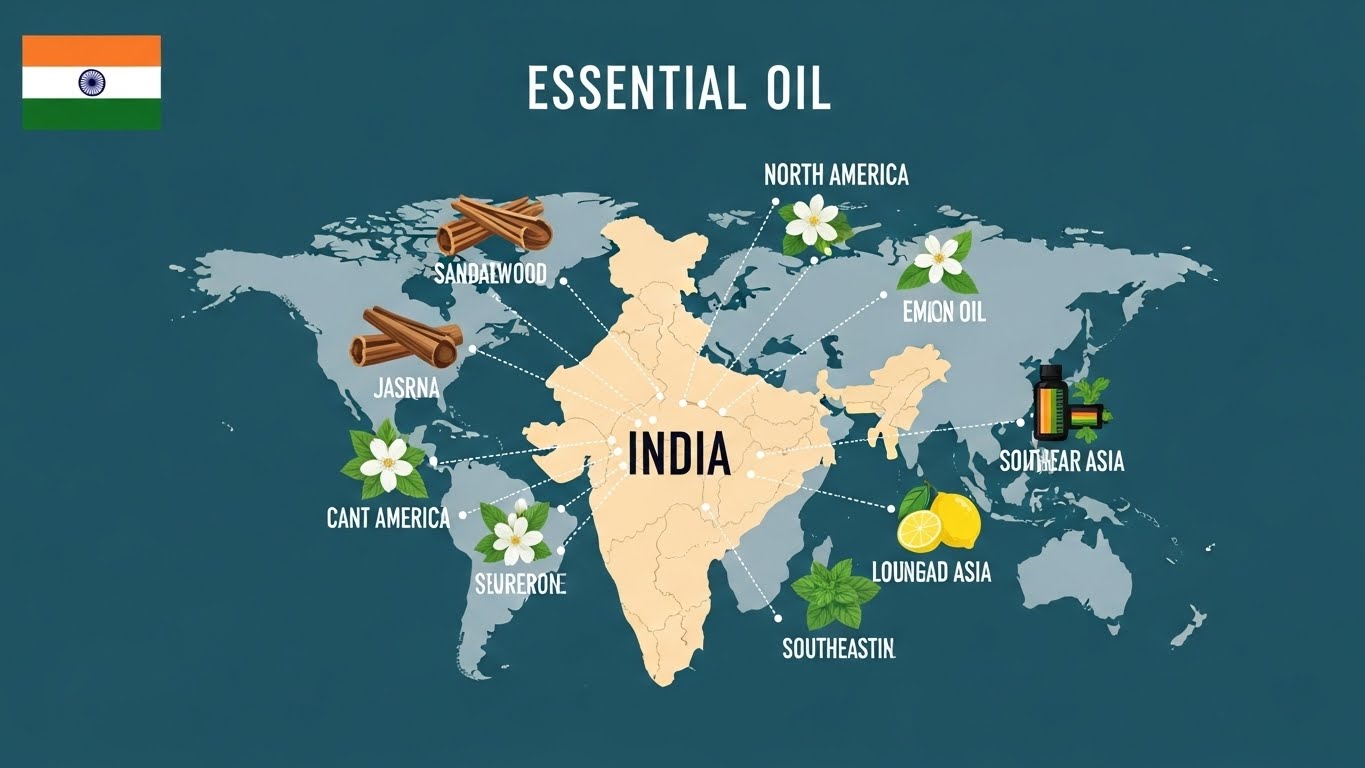
India has long been an important player in the global aromatics and botanical ingredients market. Over the past decade, essential oil exporters in India have moved from commodity-style trade toward more sophisticated, value-added supply chains that emphasize quality, traceability, sustainability and regulatory compliance. This shift is changing how buyers source ingredients for perfumery, cosmetics, aromatherapy, food flavoring and pharmaceuticals — and it’s creating fresh opportunities for herbal extracts manufacturers in india to partner across the value chain.
From volume to value: quality and standardization
Historically, many Indian exporters competed on price and volume. Today, premium buyers demand consistent organoleptic profiles, GC-MS certificates, pesticide-free status and batch-level traceability. Leading essential oil exporters in India invest in modern distillation units, in-house laboratories and third-party testing (for residual solvents, heavy metals and microbial limits). This quality-first approach helps Indian suppliers access higher-margin markets in Europe, North America and Japan, where regulatory and consumer scrutiny is intense.
Traceability and transparency
Traceability is now a commercial advantage. End customers — including large cosmetics houses and natural-product brands — expect documented provenance: what cultivar was used, where and when it was harvested, and how it was processed. Many exporters work closely with farmers and cooperative groups to maintain traceability from field to flask. This tight linkage also supports claims like organic, fair trade, or small-batch harvests, which enhance brand stories for buyers and open export routes for premium lines.
Sustainability and regenerative sourcing
Sustainability is shaping procurement decisions. Pressure from brands and regulators means exporters must demonstrate sustainable harvesting (no overharvesting of wild species), reduced carbon footprint, and fair livelihoods for smallholders. Several herbal extracts manufacturers in india are integrating regenerative agriculture practices — soil health initiatives, intercropping and water-efficient distillation — to reduce environmental impact. These sustainability credentials are increasingly non-negotiable for global supply chains aiming for long-term resilience.
Integration of herbal extracts and blended offerings
The distinction between essential oils and other botanical actives is blurring. Buyers often prefer one-stop suppliers who can provide essential oils, CO₂ extracts, tinctures and standardized herbal actives. This is where herbal extracts manufacturers in india play a strategic role: by offering both aromatic oils and functional extracts (e.g., extracts standardized for polyphenols or curcuminoids), Indian firms can supply complete ingredient portfolios to nutraceutical, cosmeceutical and functional-food manufacturers. Vertical integration lowers procurement complexity and shortens lead times.
Regulatory compliance and documentation
Export markets increasingly require technical dossiers: safety data sheets, IFRA compliance for fragrance ingredients, REACH considerations for the EU, and stricter phytosanitary certifications. Exporters who proactively maintain regulatory-compliant documentation and who can support toxicological or allergen data make themselves far more attractive to large buyers. This regulatory-readiness is a differentiator for essential oil exporters in India seeking to expand into regulated markets.
Technology adoption across cultivation and processing
Technology is improving yield and consistency. From GPS-enabled seed selection and crop monitoring to modern steam and vacuum distillation techniques, technological upgrades help control volatile profiles and minimize degradation during processing. Analytical chemistry (GC-MS, HPLC) allows product standardization and authenticity testing — an essential defense against adulteration, which remains a global concern.
Sustainability-linked financing and farmer partnerships
Access to finance has historically limited small producers from investing in better practices. Newer models — sustainability-linked loans, buyer-funded micro-investments and contract-farming agreements — enable exporters and herbal extracts manufacturers in india to build reliable farmer networks. These financing models also help spread the costs of traceability systems and third-party certifications across the supply chain.
Market diversification and niche positioning
Indian exporters are no longer competing only on traditional aromatics (like lemon, eucalyptus or peppermint). They’re developing niche oils and rare botanicals — for example, region-specific basils, indigenous herbs, and specialty citrus varieties — that attract artisanal perfumers and natural-product formulators. This niche orientation reduces exposure to commodity price swings and creates stronger brand identity for exporters.
Challenges: climate, adulteration and logistics
The sector still faces headwinds. Climate variability affects crop cycles and yields, which can squeeze supply and increase price volatility. Adulteration and quality inconsistency persist as reputational risks. Logistics challenges — from container shortages to rising freight costs — can erode margins. Successful exporters mitigate these risks through diversified sourcing, investments in local processing, and stronger QC protocols.
Opportunities: value-added products and co-development
There’s growing demand for co-development partnerships where buyers collaborate with suppliers to create tailored blends, standardized extracts or novel formulations. For essential oil exporters in India and herbal extracts manufacturers in india, co-development opens pathways to long-term contracts and higher margins. Additionally, value-added services such as private labeling, custom distillation runs, and finished-product support are attractive to global brands looking for nimble suppliers.
Conclusion
The landscape for essential oil and botanical ingredient supply is evolving rapidly. Essential oil exporters in India who prioritize quality, traceability and sustainability — and who partner closely with herbal extracts manufacturers in india — are best positioned to benefit from rising global demand for natural, verifiable and ethically sourced ingredients. By investing in technology, regulatory readiness and farmer relationships, India’s botanical industry can continue to climb the value ladder and play a central role in the future of global aromatic and botanical supply chains.